
Mauritania · January 16–23, 2027
The longest train on earth. And eight days of the desert it crosses.
The trip
Eight days across the Sahara, ending on top of a two-mile freight train.
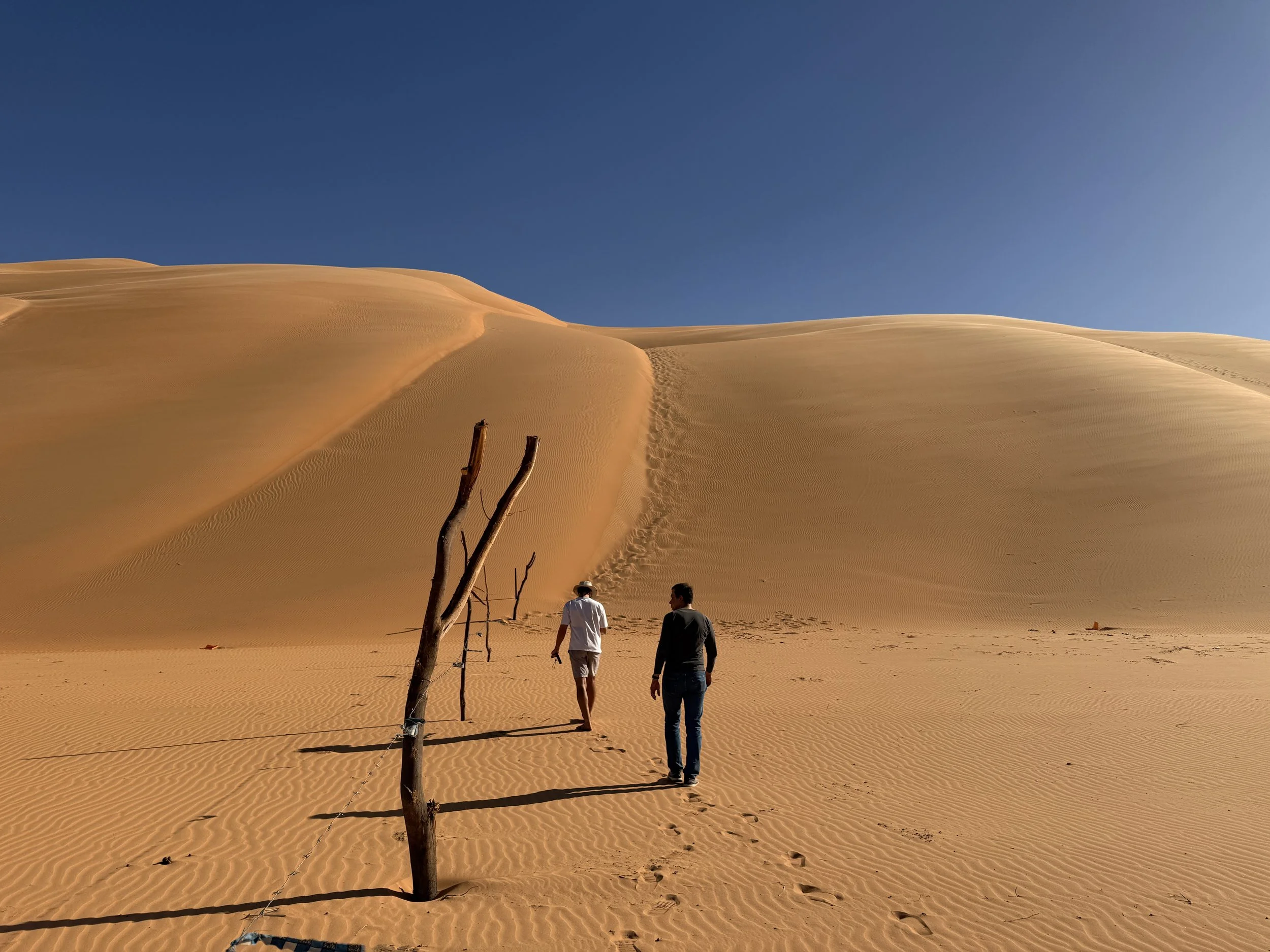
Mauritania gets somewhere around a few thousand visitors a year. Not a few thousand a day — a year. There is no tour bus circuit here, no queue at the ruins, no one selling you a selfie stick. There is sand, and there are people who will hand you tea before they ask your name.
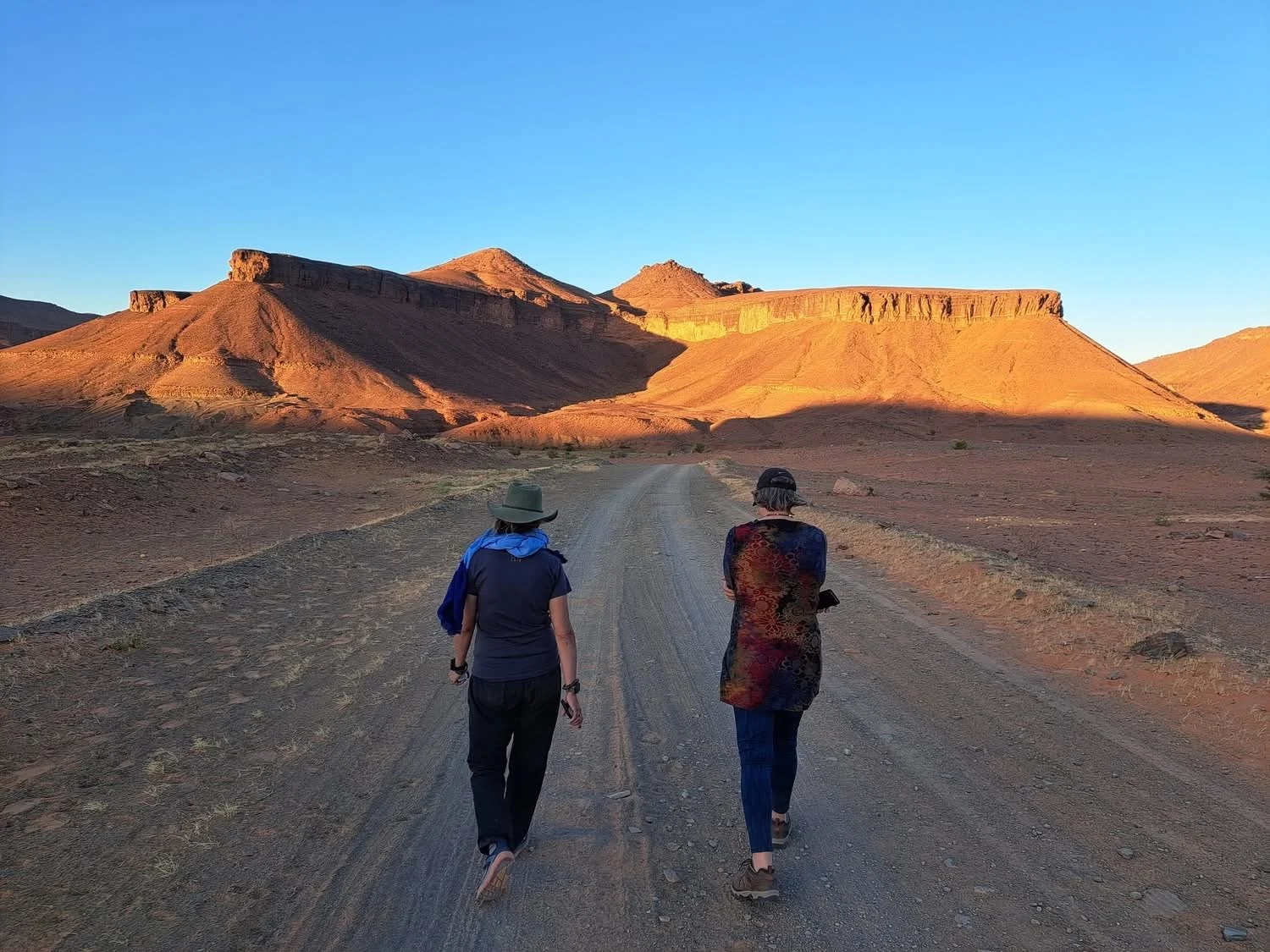
We drive out of Nouakchott and straight off the road. Four days of real off-road driving through dunes, hidden oases and villages that see a vehicle every few weeks — Azoueiga, the Terjit oasis, Chinguetti with its libraries of medieval manuscripts still held by the families who wrote them, and the Eye of the Sahara, a fifty-kilometre geological bullseye you can only really understand from the ground once someone explains it.
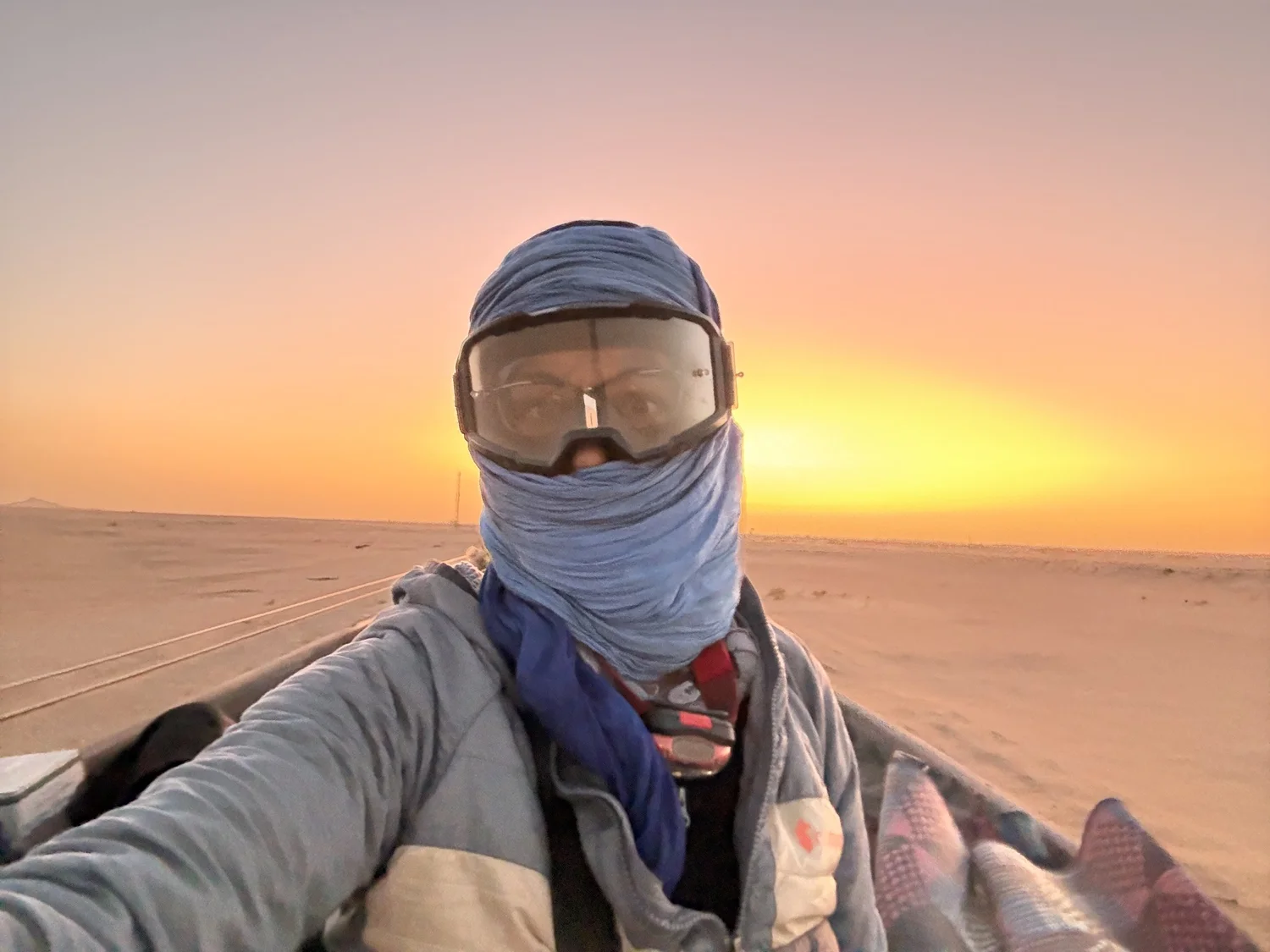
Then the train. The Mauritania Railway runs iron ore from Zouérat to the coast — often two and a half kilometres of it, one of the longest trains in the world — and you can ride it. We do. Overnight, across the desert, wrapped up against the cold, and a sunrise that I am not going to try to describe here.
I'll be traveling with you the whole way, with a Mauritanian driver-guide team I trust and have worked with on the ground. I handle the logistics, the permits, and the things that go sideways — because in the Sahara, occasionally, they do.
- Chinguetti
- Eye of the Sahara
- Iron ore train
At a glance
The essentials
- Dates
- January 16–23, 2027Saturday to Saturday
- Length
- 8 days / 7 nights
- Starts & ends
- Nouakchott (NKC)
- Pace
- Active, off-roadLong driving days, some rough ground
- Accommodation
- Hotels, guesthouses & wild camping
- Vehicles
- 4×4 convoy with local drivers
- Group size
- Small groupCapped — ask me for this year's number
- From
- $2,400 per person
Day by day
Where we go, and why we go there in that order.
The route runs northeast into the desert, then turns and comes back to the coast by rail. Travel to Nouakchott is on your own; I can book it.
Arrival on the Atlantic edge of the Sahara
You land in Nouakchott and someone is waiting for you — no taxi negotiation, no standing in the dark wondering. Transfer to the hotel, and then we all meet properly: the team, the drivers, and everyone you're about to spend a week in the desert with.
We go through the route, the packing you'll want for cold desert nights, and what to expect from the days that don't go to plan. Then sleep, because tomorrow we leave the tarmac.
Hotel, Nouakchott · Arrival transfer included
Off the road, and up the country's highest dune
This is where the trip actually starts. We leave the asphalt behind and spend the day driving properly off-road — the kind of driving where your driver reads the sand ahead of him the way other people read a map, and where the vehicle occasionally does things that make everyone laugh out loud.
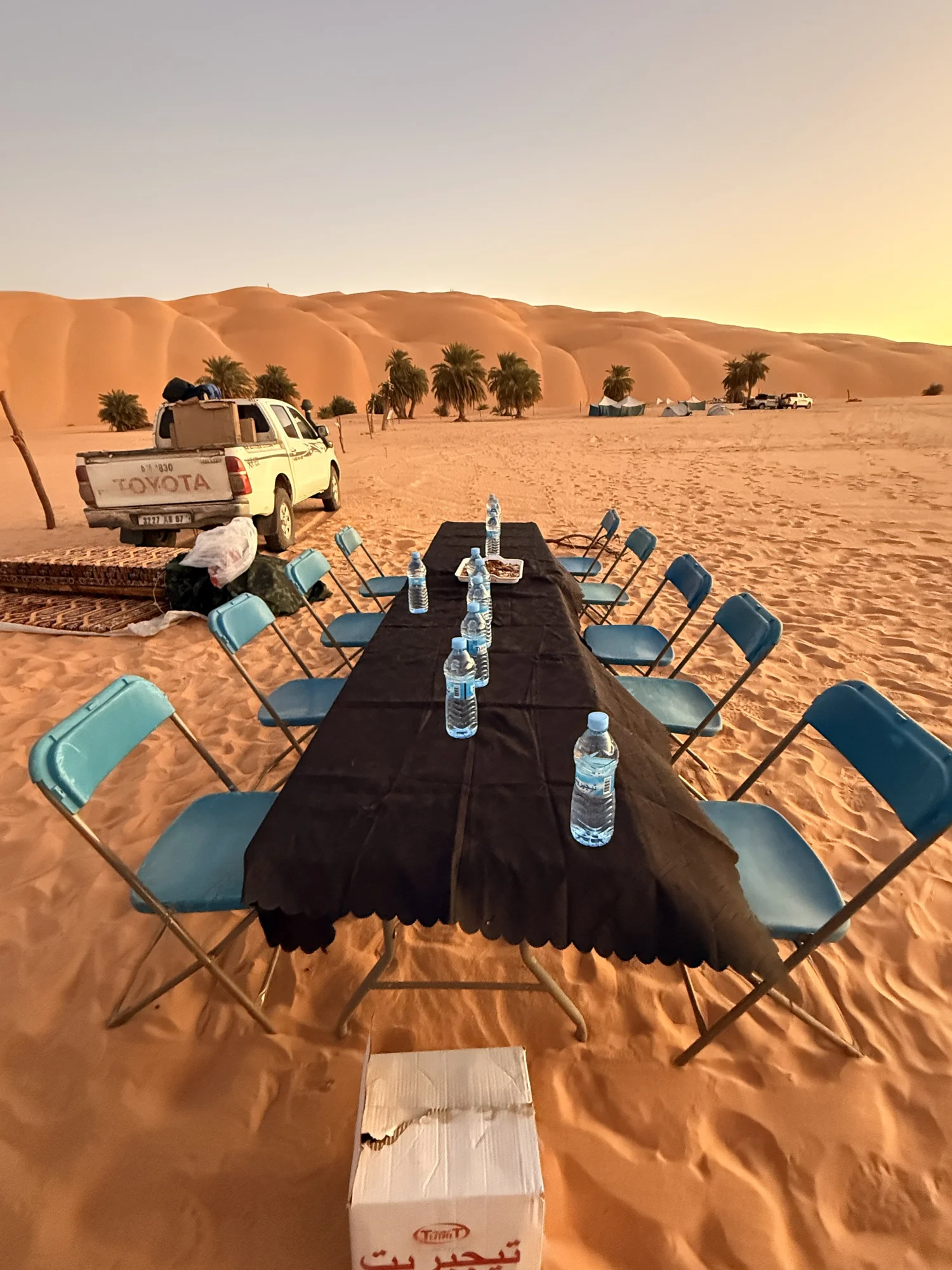
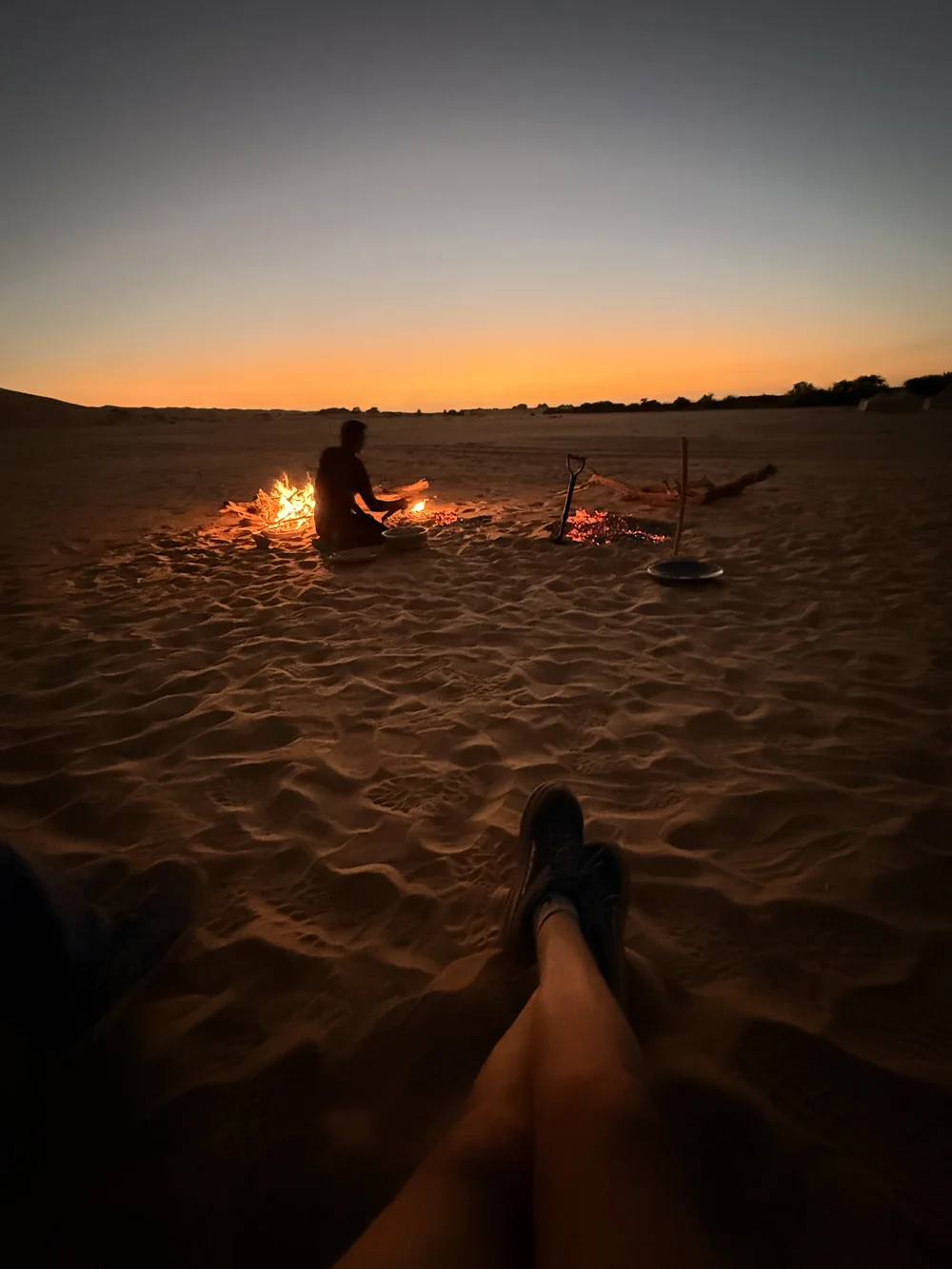
Lunch is traditional and taken out in the dunes, sitting on a mat in the shade of the truck. By late afternoon we reach Azoueiga, the highest dune in Mauritania, and make camp on the sand. No lodge, no fence, no light pollution — the first night is the one that resets people.
Wild camping, Azoueiga · All meals included
White Valley, the Tifoujar pass, and a bath in the oasis
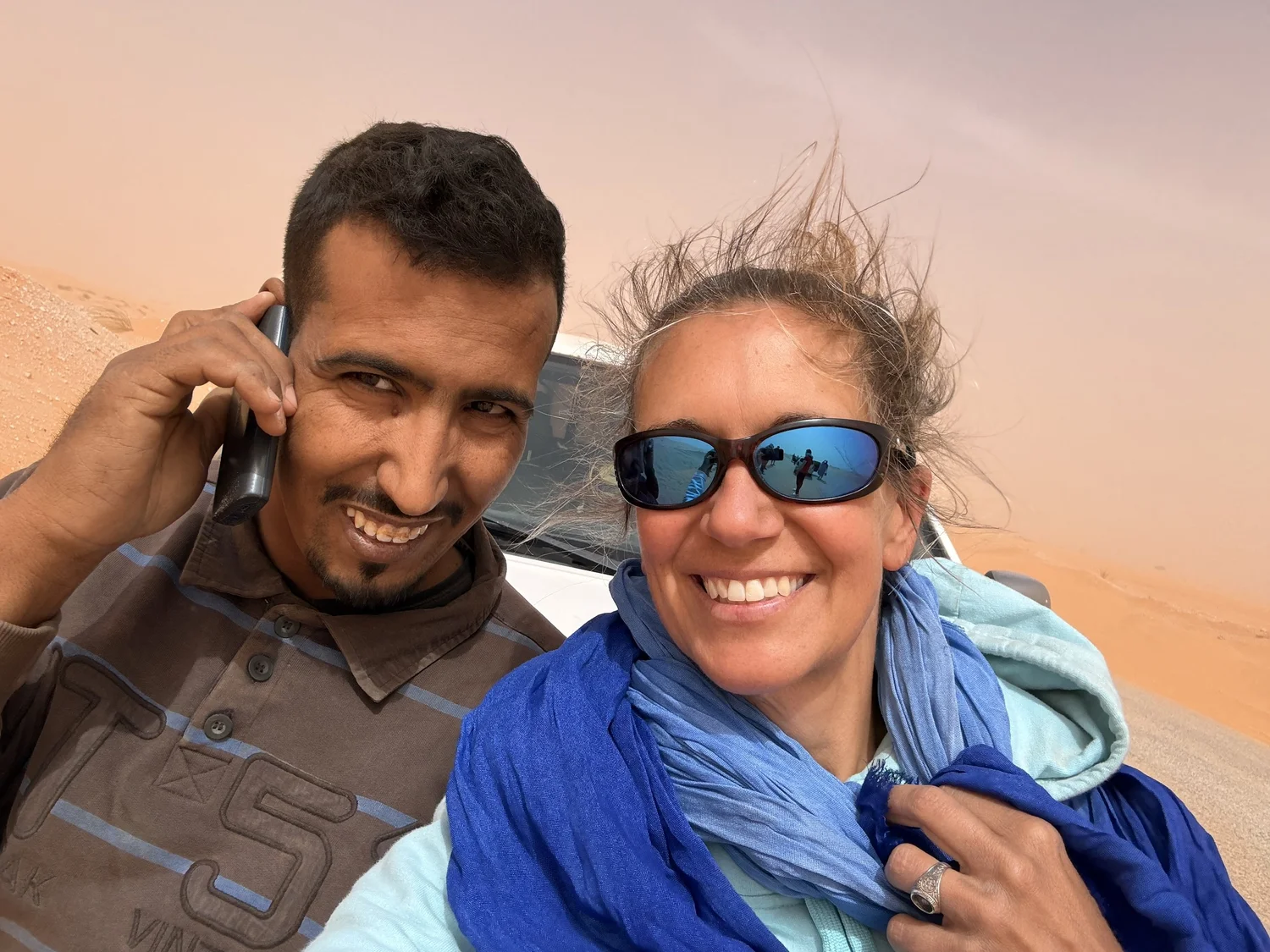
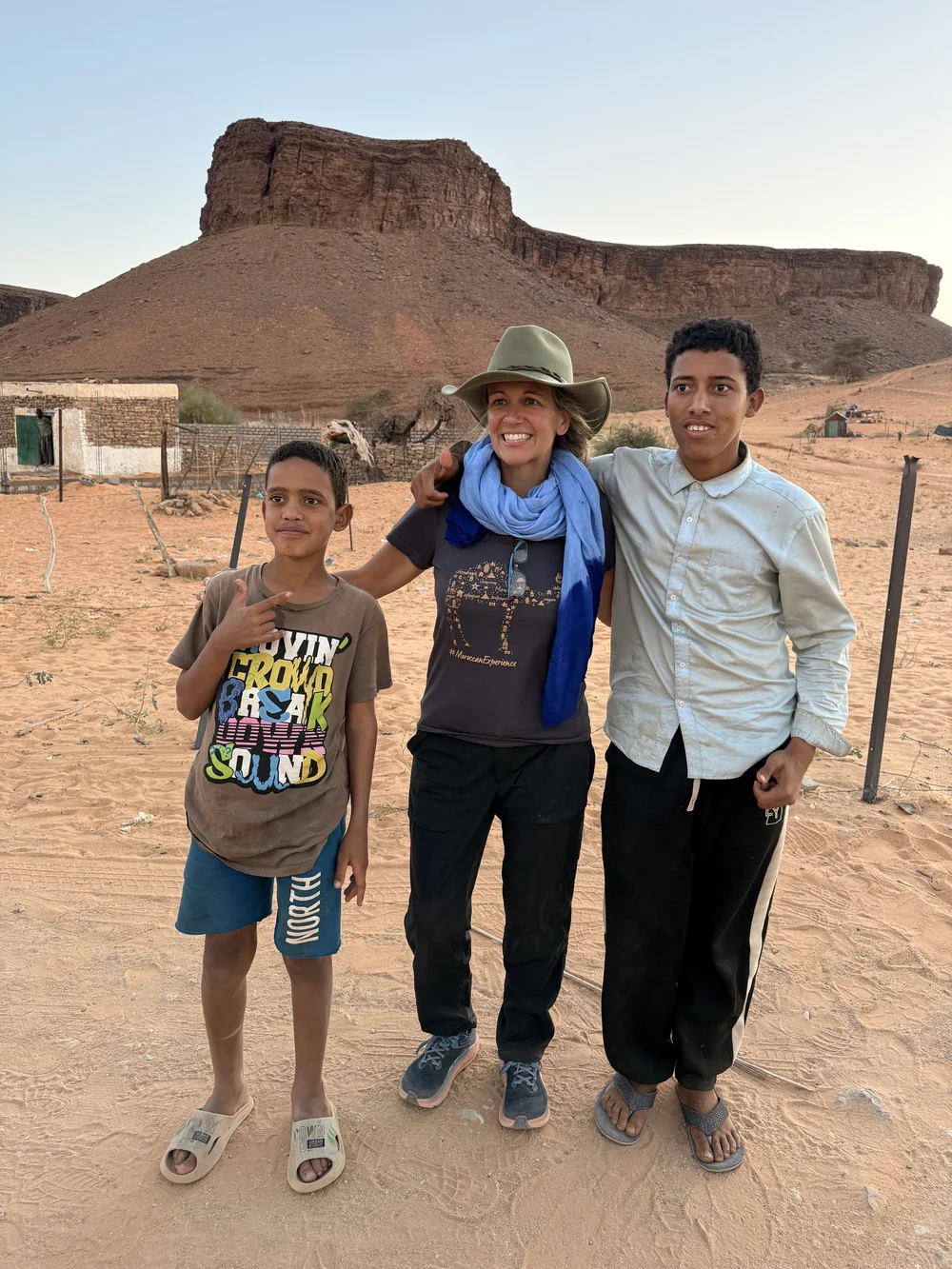
Another full day of off-road across the Sahara, with the landscape changing under you — the pale expanse of the White Valley, the dramatic drop of the Tifoujar pass, and remote villages and small hidden oases along the way where we stop, drink tea, and are usually the day's main event for everyone living there.
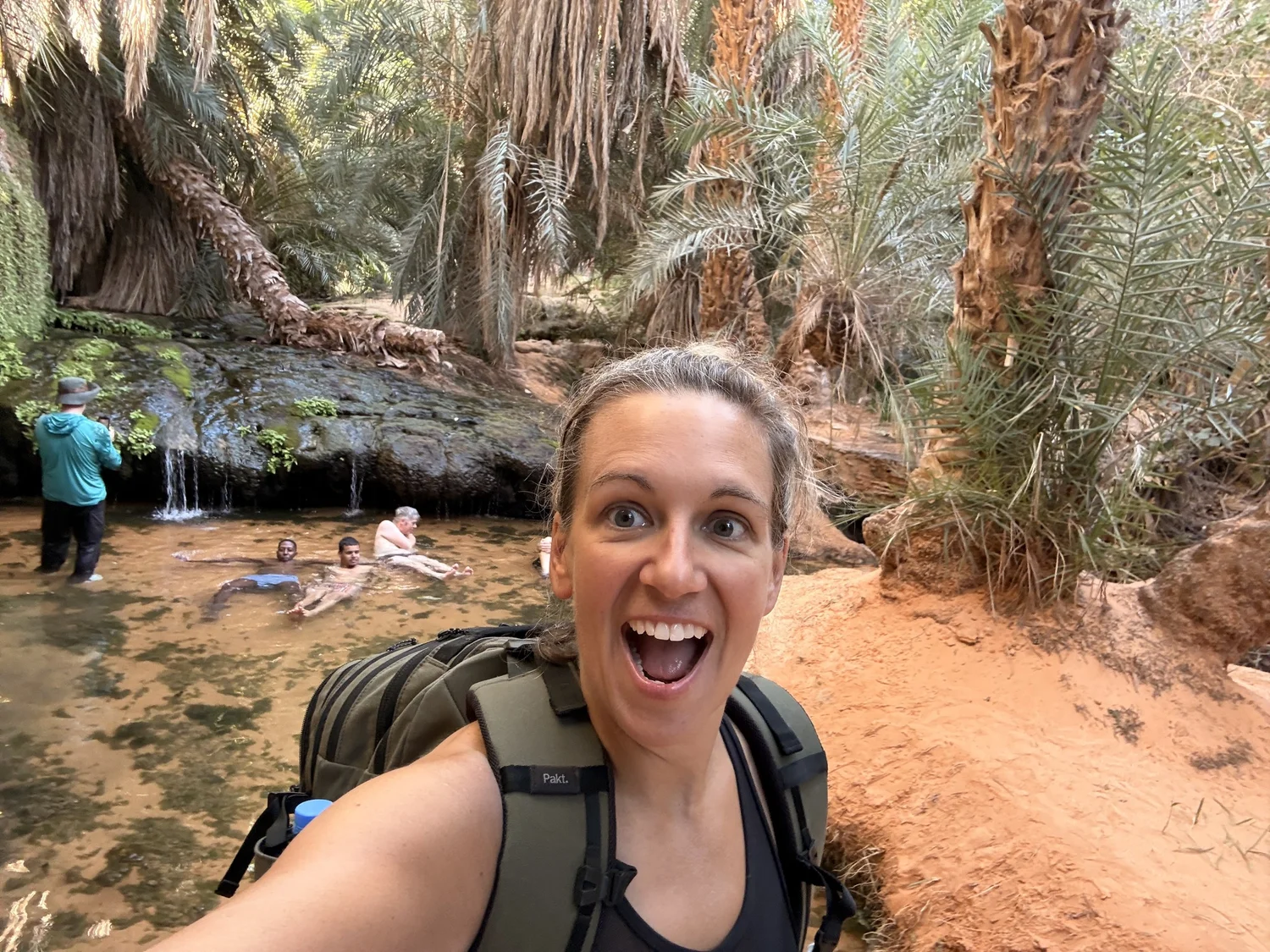
We finish at Terjit, a palm oasis running with cool spring water between two rock walls. After two days of sand in absolutely everything, you will understand why this place has a reputation.
Guesthouse, Terjit · All meals included
A medieval library town, and the Eye of the Sahara
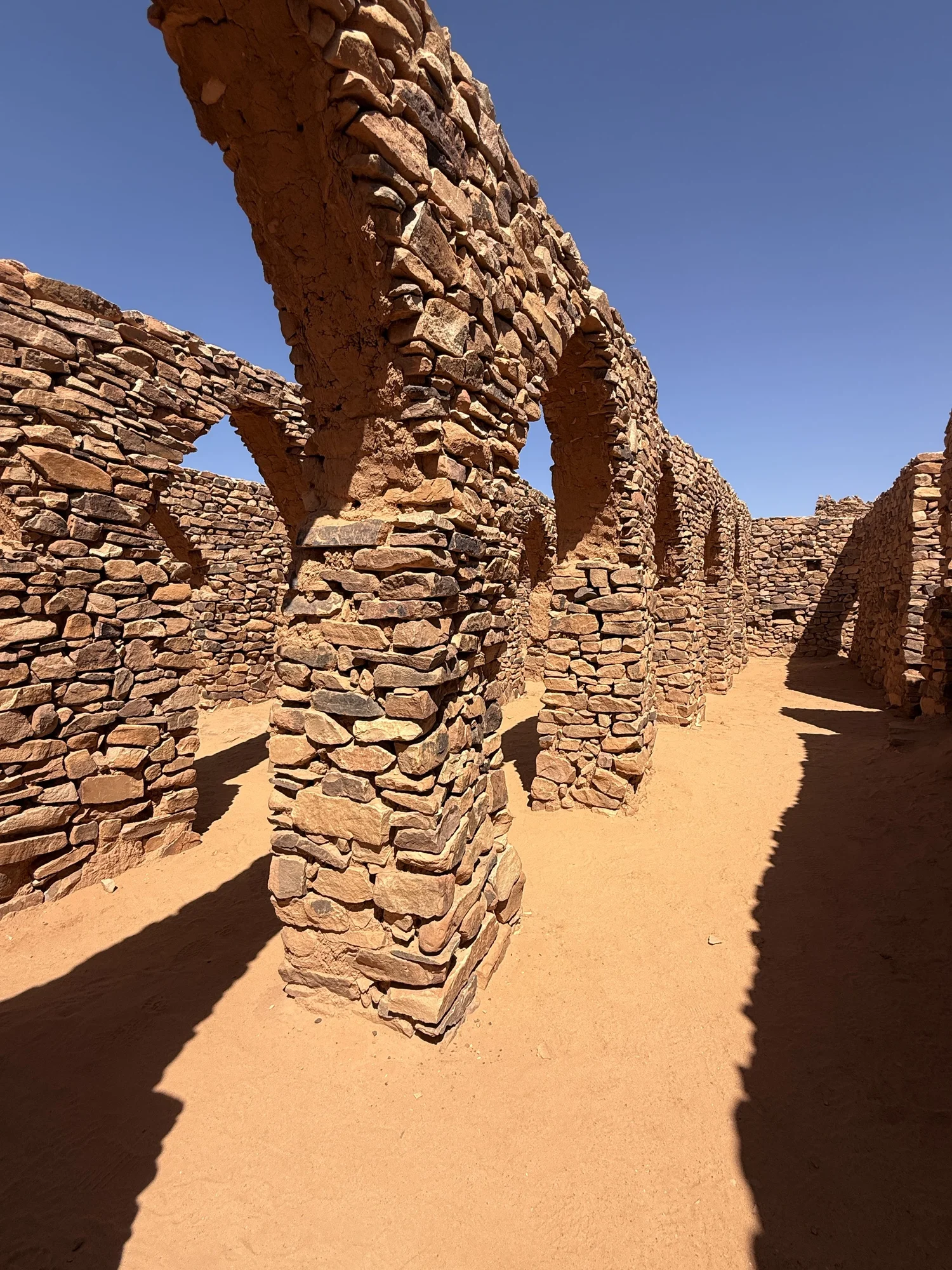
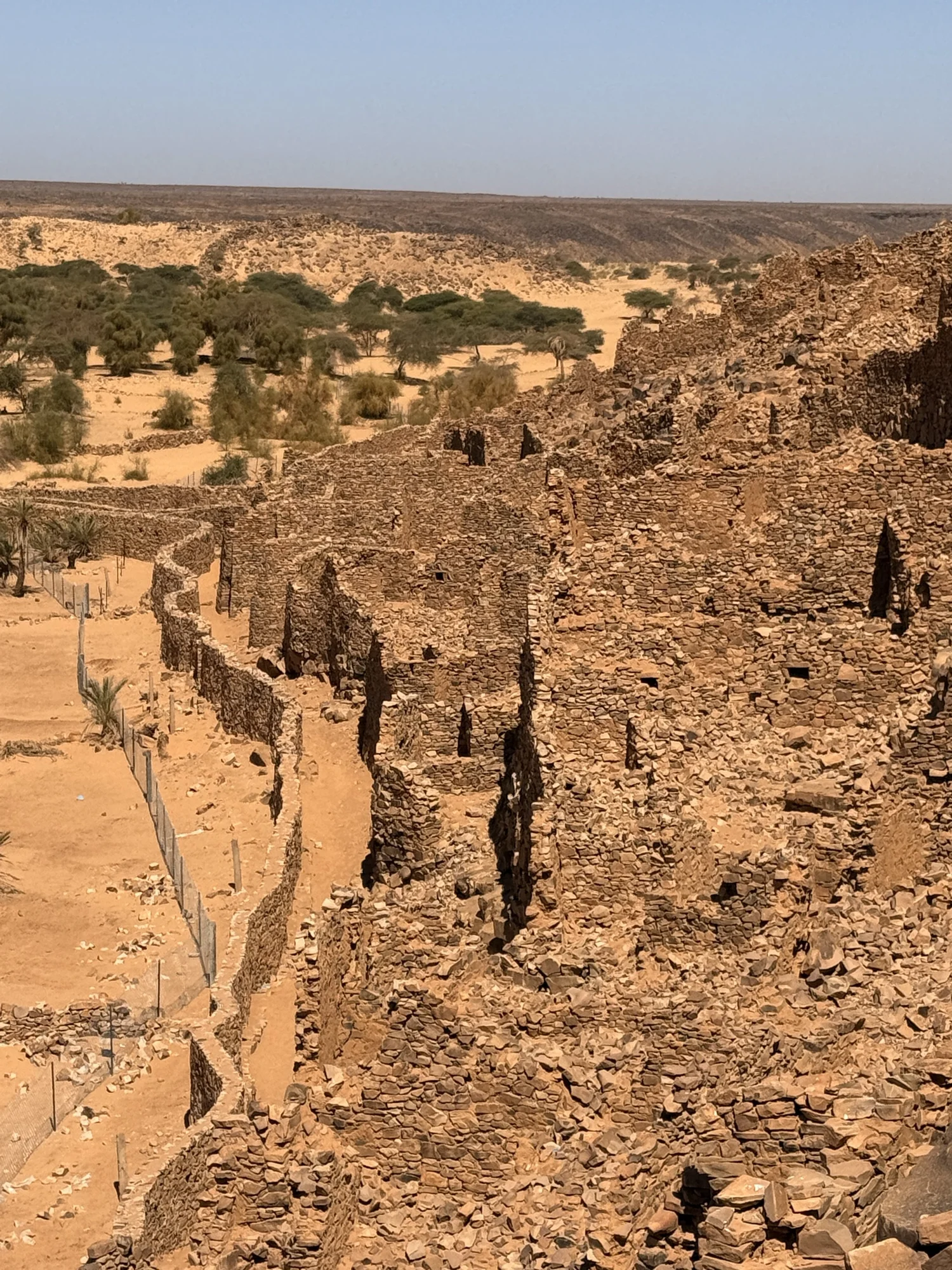
Chinguetti was one of the great caravan cities and a centre of Islamic scholarship — and the manuscripts are still here, held in family libraries, handled by the descendants of the people who wrote them. Sand is taking the old quarter back a little more each year, which is part of why seeing it now matters.
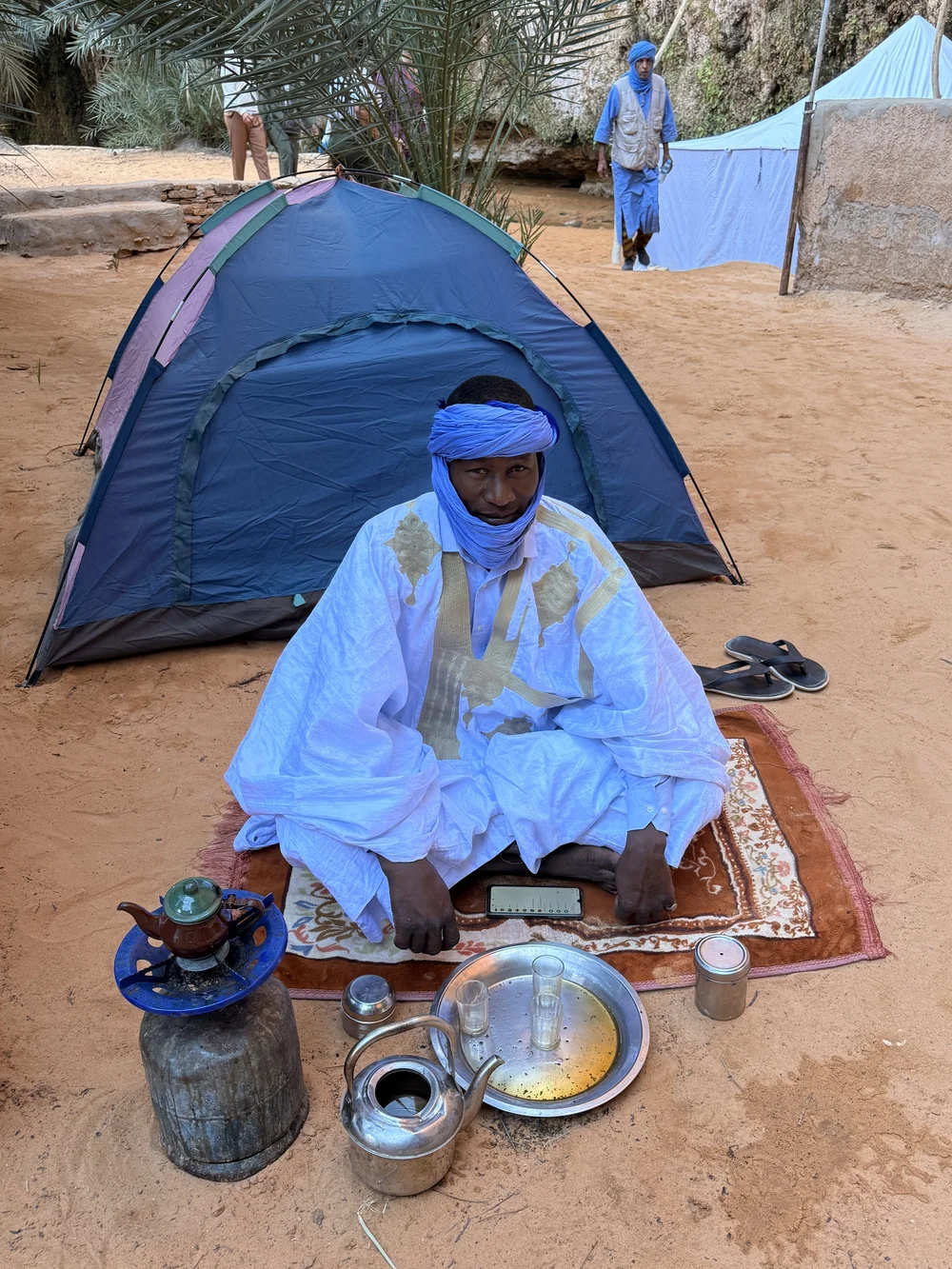
Tea with Bedouin hosts in the afternoon, at the pace tea is supposed to be drunk. Then out off-road again to the Richat Structure — the Eye of the Sahara — a set of concentric rings almost fifty kilometres across that astronauts use as a landmark from orbit.
Guesthouse, Chinguetti · All meals included
Fort Saganne, cave paintings, and sandboarding until dark
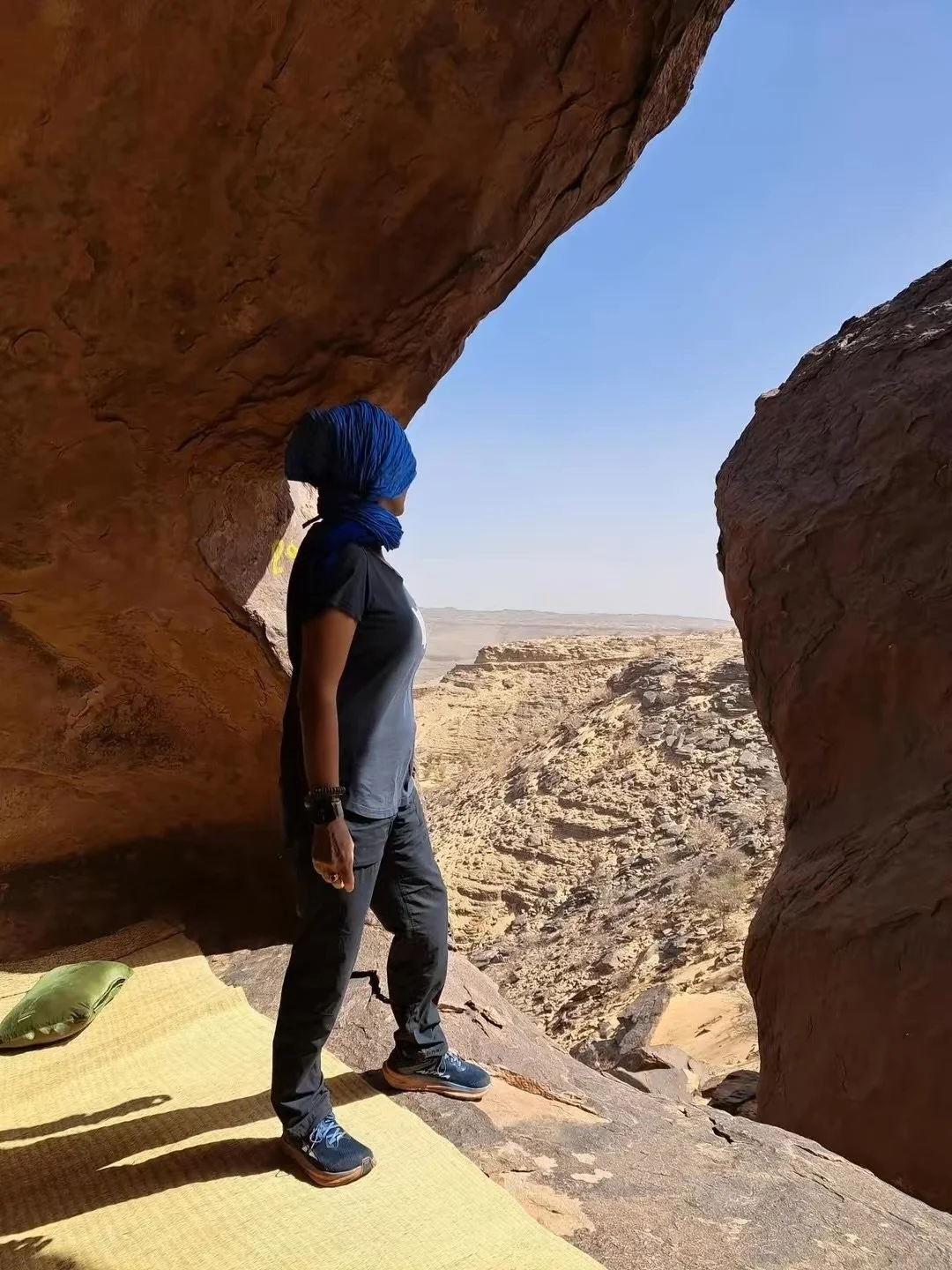
We visit Fort Saganne — built as a film set in the 1980s and left to the desert ever since, which somehow makes it stranger and better — and then rock art that has been out here for thousands of years, telling you what this landscape looked like when it was green.
The afternoon is deliberately unserious: we find a good dune and sandboard down it until people are too tired to climb back up. In the evening, local musicians, a fire, and dancing that everybody swears they aren't going to join in with.
Hotel, Ouadane · All meals included
Choum, Zouérat, and boarding the iron ore train
Breakfast in the desert the traditional way, then we drive via Choum up to Zouérat, where the ore is loaded. And then we wait — because the train comes when the train comes, and the waiting is genuinely part of it. People play cards. Someone makes tea. The horizon does nothing for a long time.
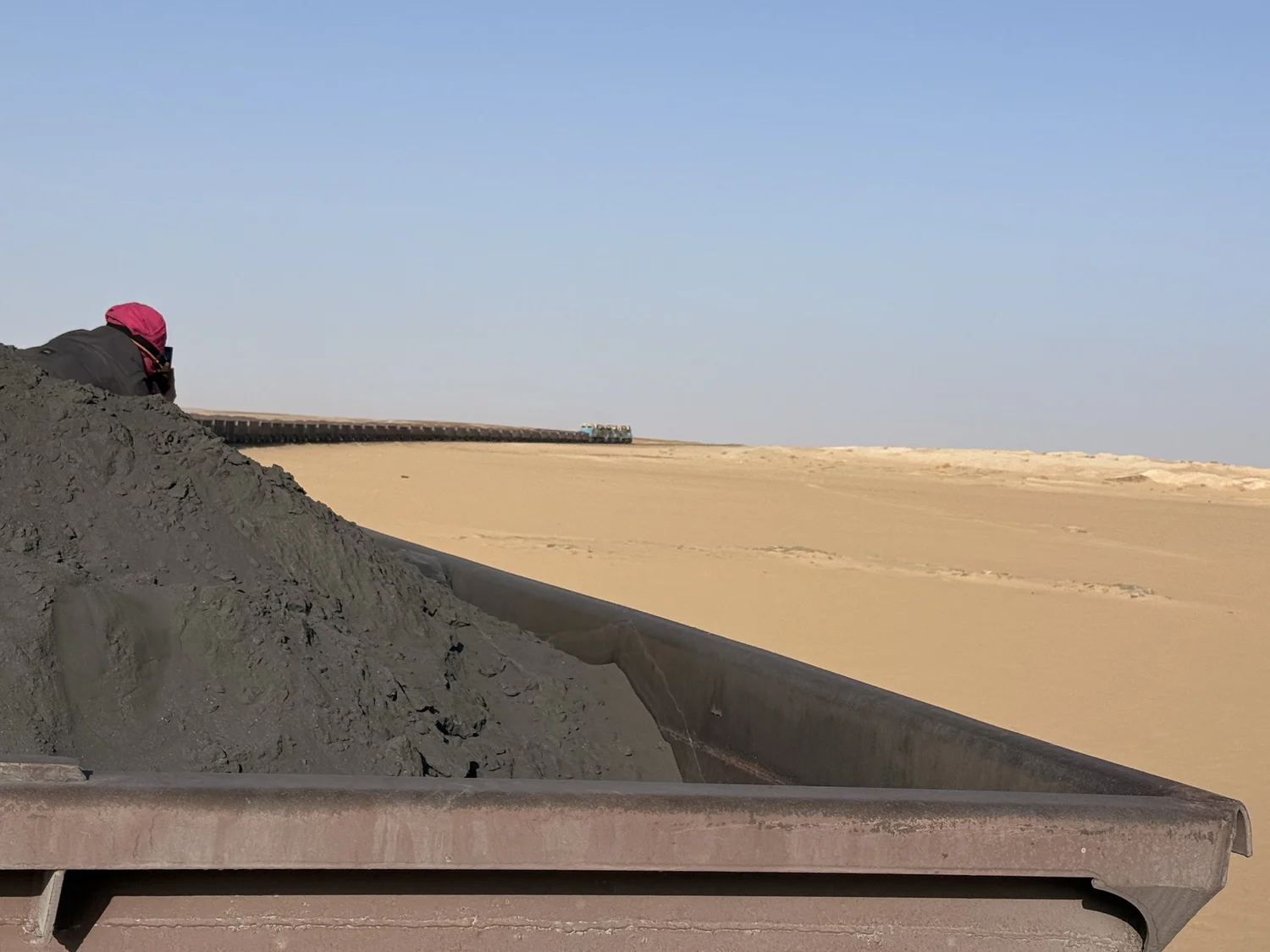
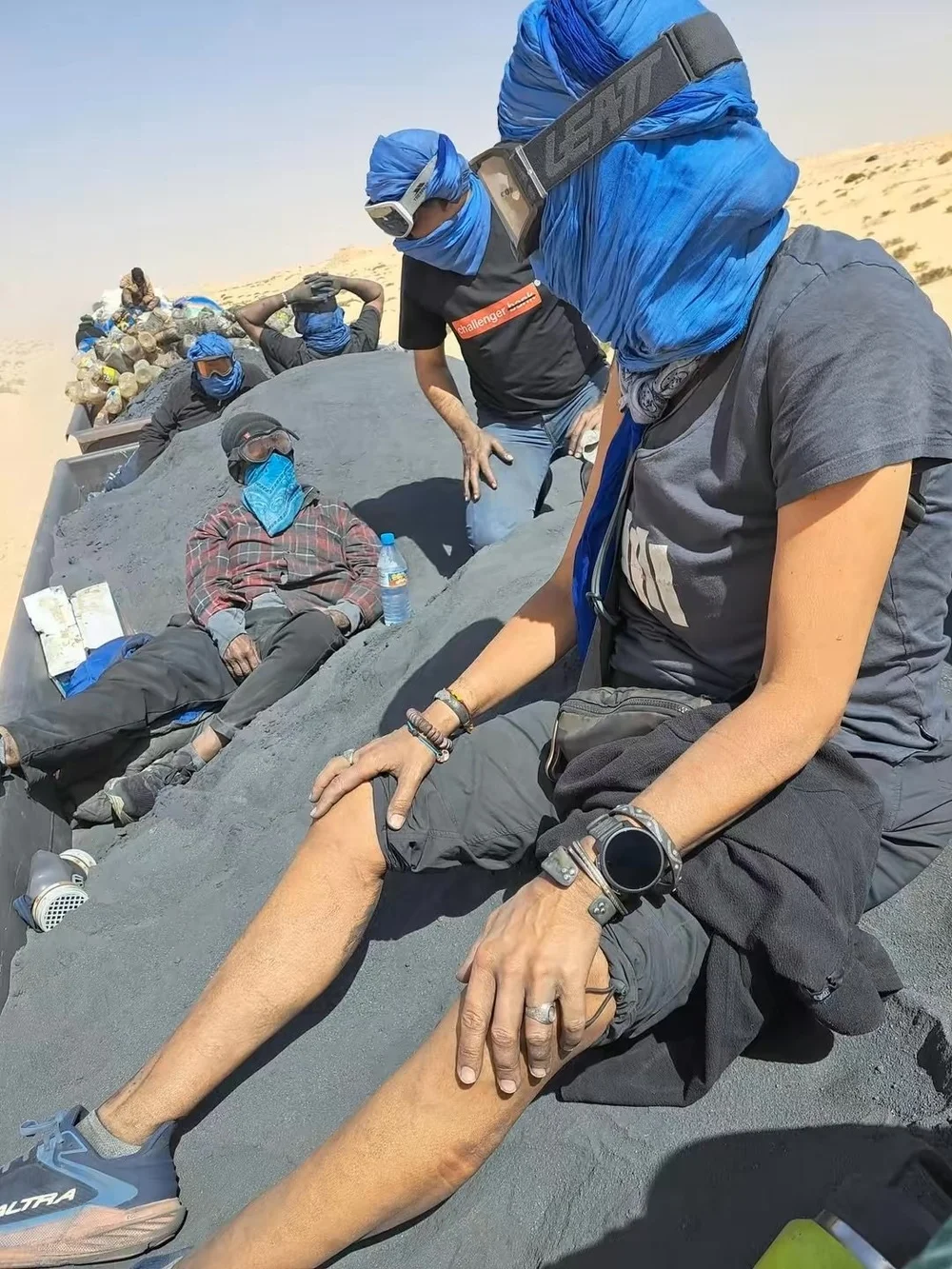
Then it arrives, and it keeps arriving, and you realise how long two and a half kilometres of freight actually is. We climb aboard for the overnight run across the Sahara. It is loud, it is cold, it is dusty beyond anything you have prepared for, and there is not a person who has done it who wouldn't do it again.
Onboard the iron ore train · All meals included
Sunrise on the ore, then a shower you will remember forever
You wake up moving. The sun comes up over the edge of the Sahara while the train is still running flat out toward the coast, and the light does something to all that iron dust that no photograph has ever quite got. Bring the camera out. Keep the sand out of it.
We arrive in Nouadhibou properly filthy, and go straight to the hotel for what is, by unanimous agreement of every group I've taken here, the best shower of anyone's life. The rest of the day is yours.
Hotel, Nouadhibou · Breakfast & dinner included
The fish market, the craft centre, and home
We drive back down the coast to Nouakchott and go to the fish market at the beach — hundreds of painted pirogues coming in through the surf, the catch carried up the sand by hand, and one of the most photographable hours of the entire trip. Then the artisan centre, if you want to take something home that was actually made here.
A rest and a shower at the hotel, dinner together, and your airport transfer. If you want to stay on — Senegal is right there, and the Banc d'Arguin is extraordinary — tell me early and I'll build it around the trip.
Departure from NKC · Breakfast & dinner included
What you're paying for
Included, and not included.
In your rate
- All accommodation — hotels, guesthouses and wild camping, double occupancy
- All camping equipment: tents, mattresses, bedding and cooking gear
- All meals from dinner on Day 1 to dinner on Day 8, plus drinking water throughout
- Private 4×4 vehicles with experienced Mauritanian desert drivers
- Iron ore train crossing from Zouérat to Nouadhibou
- English-speaking local guide throughout
- Me, as your host, for all eight days
- Airport transfers on arrival and departure
- Day room in Nouakchott before your departure flight
- All site entries, permits and local fees on the route
- 24/7 on-the-ground support
Not included
- International flights to and from Nouakchott (NKC) — I can book these for you
- Mauritanian visa — currently issued on arrival; I'll confirm the fee and paperwork before you travel
- Travel insurance — required for this trip
- Gratuities for your drivers, guide and camp team
- Alcohol — note that Mauritania is a dry country
- Personal items, souvenirs and laundry
- Extra nights or extensions before or after the trip
- Single occupancy supplement, if you'd like your own room
Investment
What it costs.
Per person · double occupancy
Single supplement on request
- $1,000 deposit holds your seat
- Balance due 90 days before departure — October 18, 2026
- Payment plans available — just ask
- Small group. When the seats are gone, they're gone.
The contact sheet
What you'll come home with.
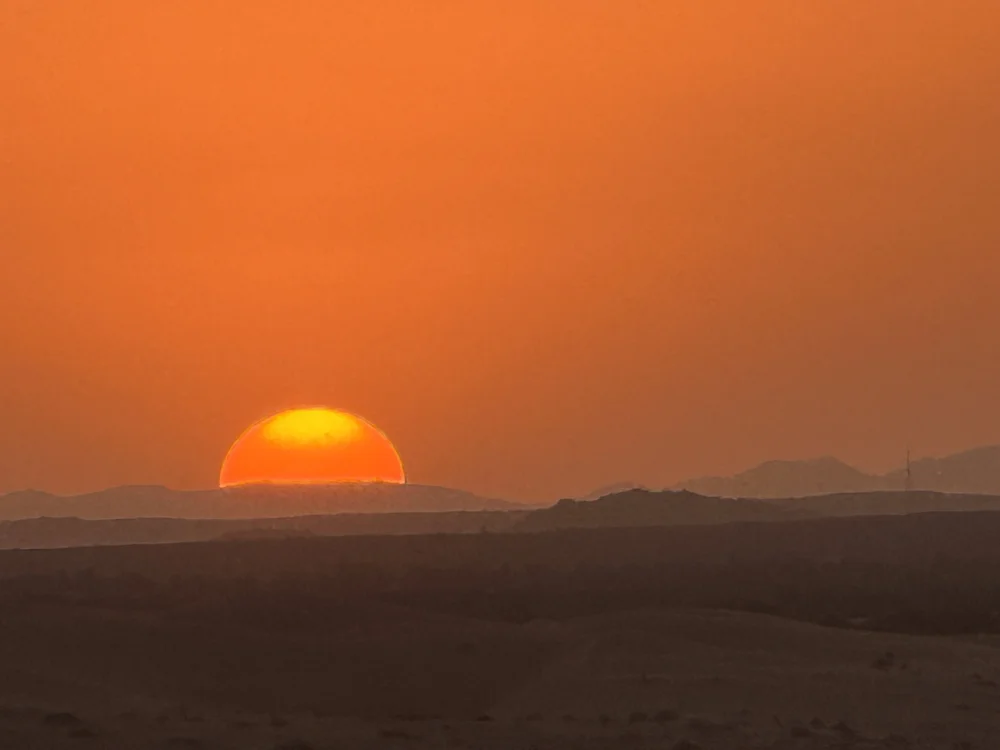
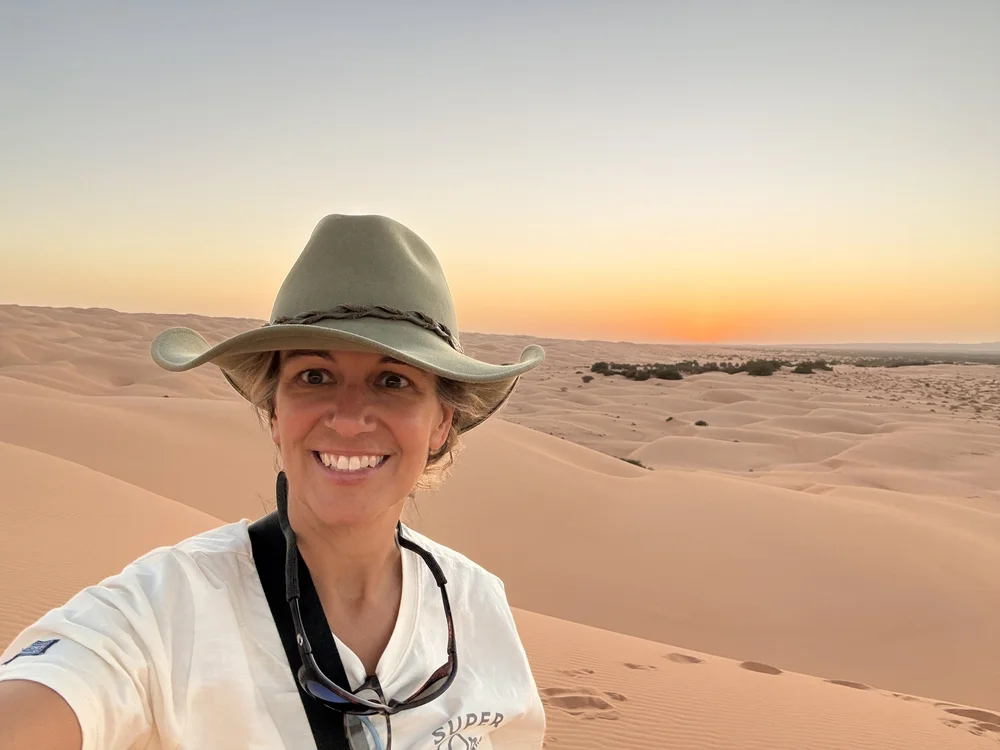
Questions
Everything people ask me before they book.
Is Mauritania safe?
Do I really sleep on a freight train?
How rough is the camping?
Do I need to be fit? What's the pace?
I'd be traveling solo. Is that going to be awkward?
What's the weather like in January?
What about visas and entry?
What camera gear should I bring?
How many people will be on the trip?
Is there phone signal or wifi?
Can I drink alcohol on this trip?
Do I need travel insurance?
How do payments work, and what if I need to cancel?
Can you book my flights, or extra time in West Africa?
Limited seats
One of the last places on earth without a queue.
Tell me you're interested and I'll send the full trip details, the booking link and the payment schedule. No pressure, no automated funnel — you'll be talking to me.